Wednesday, January 30, 2013


GREEN TEA CATECHINS FOUND TO BENEFIT SKIN FOLLOWING UV DAMAGE

Scientists from the UK have discovered that green tea compounds called catechins may help protect the skin against sunburn and the long-term effects of UV damage. The study was performed on 14 healthy human subjects with fair skin and involved taking green tea catechin supplements for 12 weeks. The dose was roughly equivalent to two cups of green tea. The effects of the supplements were tested before and after supplementation by exposing buttock skin to UV rays and quantifying the level of sunburn. The results demonstrate that catechins may contribute to skin protection against sunburn inflammation and potentially longer-term damage caused by UV rays, and may therefore be a complement for sunscreen.


FARMERS IN OREGON ATTEMPT TO MARKET LOCALLY HARVESTED TEA

Minto Island Growers, a small-scale farm cultivating and selling vegetables and plants, is ready to take on a rather unconventional challenge: tea production. The first step was to identify which varieties of tea bushes were most suitable for the local climate, a process that took over twenty years. Now that the farm has a half-acre dedicated to tea, its sights are set on the next stage: harvesting and processing the leaves on-site on a larger scale. The company has already reported a high level of interest from nearby tea bars, food stores and tea companies, all thirsty for home-grown produce. Despite mixed assessments from horticulturalists, Minto Island Growers will devote more land to this project in 2013, with additional two to three acres allocated to tea plants. The growers also applied for a federal grant to help cover the costs of processing, packaging and marketing their tea. They remain upbeat about their prospects based on positive feedback from their customer base.


Friday, January 25, 2013

INVENTORY   REDUCTION
SALE
26 JANUARY  THROUGH  09 FEBRUARY
STOREWIDE
20%  TO  50%

ACCESSORIES   25%
BAR & DRINKWARE   20%
BATH & BODY   20%
BOOKS   45%
CARDS & STATIONARY   45%
CLOTHING   25%
DOCTOR  WHO  MERCHANDISE   25%
FLAGS   20%
FOOD   25%
JEWELLERY   20%
KITCHEN   45%
NOVELTIES   45%
PATAK   10%
ROCK LEGENDS   25%
SPORTS   25%
LOOSE  LEAF  TEA   10%
HERBAL  TEAS   20%
COMMERCIAL  TEAS   20%
TEA WARE   20%
TOYS  GAMES  COSTUMES   45%
WALL  ART   25%


SOME  EXCLUSIONS  APPLY
(i.e., beverages are not on sale, etc.)


CELEBRATE  ALL  THINGS  SCOTTISH
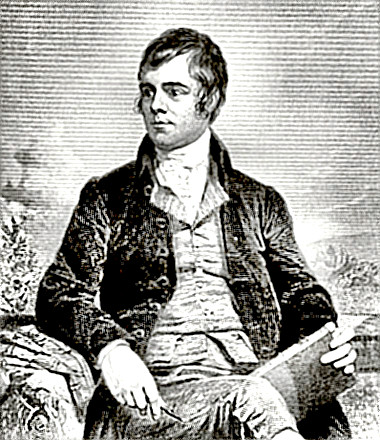
ROBERT  BURNS  DAY
25  JANUARY  2013
 
 
And there's a hand, my trusty fiere!
And gie's a hand o'thine!
And we'll tak' a right guid-willie waught,
For auld lang syne.
 
      
The annual celebratory tribute to the life, works and spirit of the great Scottish poet, Robert Burns (1759-1796). Celebrated on, or about, the Bard's birthday, January 25th, Burns Suppers range from stentoriously formal gatherings of esthetes and scholars to uproariously informal rave-ups of drunkards and louts. Most Burns Suppers fall in the middle of this range, and adhere, more or less, to some sort of time honoured form which includes the eating of a traditional Scottish meal, the drinking of Scotch whisky, and the recitation of works by, about, and in the spirit of the Bard.

SCOTLAND, Jan. 25, 2013 /PRNewswire/ -- It's that time of year again, dig out the tartan and dust off the Toast to the Lassies: it's Burns Night. On January 25 each year, Scots and Scots-at-heart around the world raise a glass to the memory of Bard Robert Burns, as they prepare to pipe in the famous haggis.
Yes, the National Poet of Scotland has his own annual celebration, one of a festive quartet of Scottish winter holidays including St. Andrews Day, Christmas, Hogmanay, and Burns Night. Burns Night is much more than the same old stanzas and rhymes. Kilt-clad Scots and Scottish Americans celebrate the day with a traditional Burns Night Supper, tableside bagpiping, the reading of the "Address to a Haggis" (which opens the meal), whisky, and much more to pay tribute to the legendary bard.
"Burns Night is a great opportunity for everyone to come together and celebrate the writings of Scotland's national poet," says Scottish Government Culture Secretary Fiona Hyslop . "His works are recognized around the world and his humanity, wit, wisdom and humor are expressed in poetry, writing and song which still has the power to move and touch millions."
A traditional Burns Night Supper features haggis, a savory pudding that usually contains sheep's pluck (heart, liver and lungs) mixed with spices and marinated in an animal's stomach casing. Side dishes include "neeps" (mashed turnips) and "tatties" (minced beef and mashed potatoes). While dining, Burns enthusiasts recite the Bard's best works to the sounds of bagpipes. The first suppers were held in Scotland at the end of the eighteenth century by Robert Burns ' friends and 2013 will mark the 254th anniversary of his birthday.
 
To celebrate the Bard's birthday, here are few fun facts about Robert Burns :
  • After Queen Victoria and Christopher Columbus , Robert Burns has more statues dedicated to him around the world than any other non-religious figure.
  • J.D. Salinger's famous 1951 novel Catcher in the Rye based its title from a poem by Robert Burns "Comin' Thro' the Rye."
  • Bob Dylan selected Burns' 1794 song "A Red, Red Rose " when asked for the source of his greatest creative inspiration.
  • John Steinbeck took the title of his 1937 novel Of Mice and Men from a line contained in Burns' poem "To a Mouse:" "The best laid schemes o' mice an' men / Gang aft agley."
  • A miniature book of Robert Burns ' poetry was carried into orbit by astronaut Nick Patrick on a two-week space mission in 2010, completing a 5.7-million mile trip and 217 orbits of the Earth. 
  • Robert Burns produced over 550 songs and poems. That averages at around 25 works for each year of his adult life (Burns passed away at 37).


Thursday, January 24, 2013


Drinking tea ‘can lower the risk of dying from heart disease’

Tea is known for its several health benefits. Add one more to the list - drinking a cup of the beverage thrice daily can significantly reduce the risk of dying from heart disease, a new study has claimed.
Researchers at the University Medical Centre Utrecht have found that the favourite hot drink enjoyed by millions of people worldwide is packed with health-boosting properties and mainly it has significant protective effects on the heart.
People who sip between three and six cups of tea each day are 45 per cent less likely to die from coronary problems compared with those who drink fewer than one a day. And, two to four cups of coffee a day may lower your risk of developing heart problems by 20 per cent, the study has found.
The humble cuppa contains flavonoids, which offer significant cardiovascular benefits - potentially saving many thousands of lives each year, say the researchers.
For the study, the researchers studied tea and coffee consumption among 37,514 people and monitored their health for 13 years, and found that those who drank about two large mugs of tea a day had their risk of suffering coronary problems slashed in half.
Responding to the findings Ellen Mason, senior cardiac nurse at British Heart Foundation, said, “This adds further weight to the evidence that drinking tea and coffee in moderation is not harmful for most people, and may even lower your risk of developing, or dying, from heart disease.
 
“However, leading a healthy overall lifestyle is the thing that really matters when it comes to keeping your heart in top condition.” Ellen Mason added.

Wednesday, January 23, 2013

'TEA  AS  GOOD  AS  WATER
TO  KEEP  YOU  HYDRATED'

Here’s some good news for tea lovers! Drinking the beverage, and lots of it, is just as good as downing water at keeping one hydrated on a hot summer day, a new study has claimed.
Researchers have carried out the study and busted the myth that tea is a diuretic - in fact, they found that it doesn’t bother one’s bladder any more than plain water, the ’Daily Mail’ reported.
“If you fancy a cup of tea on a hot summer’s day, have it. A cup of tea is going to give you the same hydration as a glass of water,” lead researcher Carrie Ruxton was quoted as saying.
The researchers asked 21 men to drink mugs of tea over a 12-hour period, or a similar amount of plain, warm water. On another day, the tea-drinkers were given water and vice versa.
Blood samples were taken and the men’s urine was collected and tested. The men did not pass any more water when drinking tea and may even have passed slightly less. There was also little difference in levels of sodium and other salts.
Dr. Ruxton said, “It’s a common misconception that drinking tea can increase the risk of dehydration because of the caffeine content. But this new study proves that there is absolutely no truth behind the theory.”
“Drinking moderate amounts of tea - four mugs a day - offered the same excellent hydration qualities as plain water. In addition, urine volume was similar after tea or water, confirming that we do not urinate more after drinking tea.” Dr. Ruxton said
“Not only is a mug of tea refreshing and delicious, it can be an important part of maintaining proper hydration.” Dr. Ruxton added.
Dr. Catherine Hood, of the Tea Advisory Panel, which funded the research, said, “Tea drinkers can be reassured that their favourite cuppa can count towards their fluid intake without the risk of dehydration.”

Tuesday, January 22, 2013


NINE  TEA  TIDBITS


1. Tea is one of the world’s oldest beverages. The tea plant, Camellia sinensis, was first discovered by the ancient Chinese, who then spent many centuries perfecting the art of tea production, which resulted in a variety of types available today.

2. The etiquette of preparing and drinking tea was first documented by the Chinese, as well. The third volume of the book published in 780 A.D. by the author Lu Yu elaborated on different ways to brew and serve tea. The tea pot and the tea bowl are also Chinese inventions.

 3. After the Chinese, tea was first adopted by the Japanese and then, in the 17th century, by the Europeans looking for cash crops to grow in their tropical colonies. In those early days, tea in Europe was a highly prized luxury item. Today, tea is cultivated most widely in China, Japan, India, Sri Lanka, Africa, and Georgia.
 
4. Famous British “5 o’clock tea” was founded by the seventh Duchess of Bedford who was prone to light bouts of hunger in the afternoon. Once, she ordered a pot of tea with light snacks to be served in her room, and enjoyed the experience so much that made afternoon tea an everyday ritual. Soon, all London was sipping tea and nibbling on little sandwiches around 5 o’clock in the afternoon.

5. While the Chinese and Japanese always consume tea as is, and the Europeans add milk into it, the Tibetans prefer to drink tea laced with… yak butter, the Moroccans flavour their beverage with mint, basil, or sage, and the Russian add jam into their tea.

6. The European habit of drinking tea with milk is traced back to the 18th century Britain. In those days, expensive china tea bowls were so fragile that hot tea poured there might easily break them. This this why cold milk was added to delicate bowls first.

7. The most exotically flavoured tea is made in Kashmir: a blend of green and Darjeeling tea is brewed together with crushed green cardamoms, cinnamon, cloves, chopped almonds, and pine nuts.

8. Many naturopathic doctors discourage their patients from drinking tea since it can overstimulate the adrenal gland and disrupt the delicate blood-sugar-regulation mechanism, thus leading to chronic fatigue, depression, allergies, insomnia, and other disorders.

9. On the other hand, the Asians always considered tea beneficial. Ancient Chinese doctors were prescribing a tea leaves brew as a cure for headaches and even as the elixir of immortality! It was believed that tea clears the voice, improves the memory, promotes digestion, and regulates all processes within the body.

Monday, January 21, 2013

Meet Chef Darrell!

MEET  CHEF  DARRELL  MILLER


It’s not every day that you meet a chef who not only cranks out delicious meals on a daily basis, but can also install your fire sprinklers, fix your plumbing or drive a big rig.

But those are just a few of the trades that Darrell Miller has learned over the span of his professional career before landing his current position as Chef of The DICKENS Café in The CURIOSITY Shop in downtown Aiken.

In fact, the Washington, D.C. native originally went to school to become a truck driver, but soon discovered that wasn’t what he wanted to do.

“I still had money left on my grant so I went back to school and culinary arts was one of the fields that was covered,” Miller said of his transition into the culinary field in the mid-1980s. And even though he always enjoyed cooking, he never dreamt that the winding road ahead of him would ultimately lead to a successful  career as a chef. “It was just something to do.”

After graduating from National Training Systems he soon found himself back in the truck-driving business, driving a truck for a maintenance company for nearly 15 years. In fact his first official job working in a kitchen wouldn’t come until the late 90s when he worked in an outside kitchen at The Warf in D.C. And it wasn’t until he moved to South Carolina that he really embraced the joy of cooking.

With such esteemed establishments as The Green Boundary Club, The Reserve Club at Woodside and Sage Valley under his belt, Miller brings over a decade of kitchen experience and an eye for food styling.

“Seeing the finished product is my favorite thing about cooking,” said Miller, who takes great pride in the presentation of his dishes.

When preparing the plates to be photographed for The CURIOSITY Shop’s daily café posts on the various social media sites, he is meticulous in his garnishing. It is only after the pepper is perfectly cracked, the parsley is sufficiently scattered and the lemon wedge is strategically placed that he is ready for the world to see his creations. And the fact that The DICKENS Café infuses British Isle-inspired recipes and ingredients from around the world into its cuisine makes the food preparation even more of a challenge.

“This job has me constantly thinking about how to bring different cultures to the food,” said Miller, who has prepared the traditional English dish, Bangers n’ Mash, and the Scottish roast beef sandwich, Inky Pinky, just to name a few of the UK-inspired entrees . “It keeps me from getting bored, and I accept it 100 percent.”

Miller says the best part about working at The DICKENS Café and The CURIOSITY Shop is the friendly and charming atmosphere.

“It does make me feel like I am at home,” said Miller. “You walk around downstairs and you feel like you are in a grocery store, then you go upstairs and it’s like a department store. And the café makes me feel like I am back at home in the kitchen.”

The most rewarding aspect of the job, he says, is the patronage.

“I have to give it up for the customers,” said Miller. “They are so sweet and they let us know we are doing a good job. When I see that café fill up, that’s what it’s all about.”

Miller also owns a seasonal restaurant in Salley called D’s that usually opens in November.
“We have things like burgers, sandwiches and wings but we also have daily blue plate specials,” said Miller.

When he’s not cooking , he is spending time with his wife, his 17-year-old son, his 9-year-old daughter, his Rottweiler, Tech, and his two Shih-Poos, Lacey & Champ.  He also has a 22-year-old daughter and a 19-year-old son who live in D.C.

“I’m like a soccer mom,” laughs Miller. “One minute I am at a football game with my son and the next minute I am riding around in a go-cart with my daughter.”

 For more information about The DICKENS Café and the daily specials, visit The CURIOSITY Shop’s website at www.curiosityshoptea.com or the shop’s  Facebook page.  For to-go orders and downtown deliveries, or to make reservations for large parties, call 803-644-1400.